


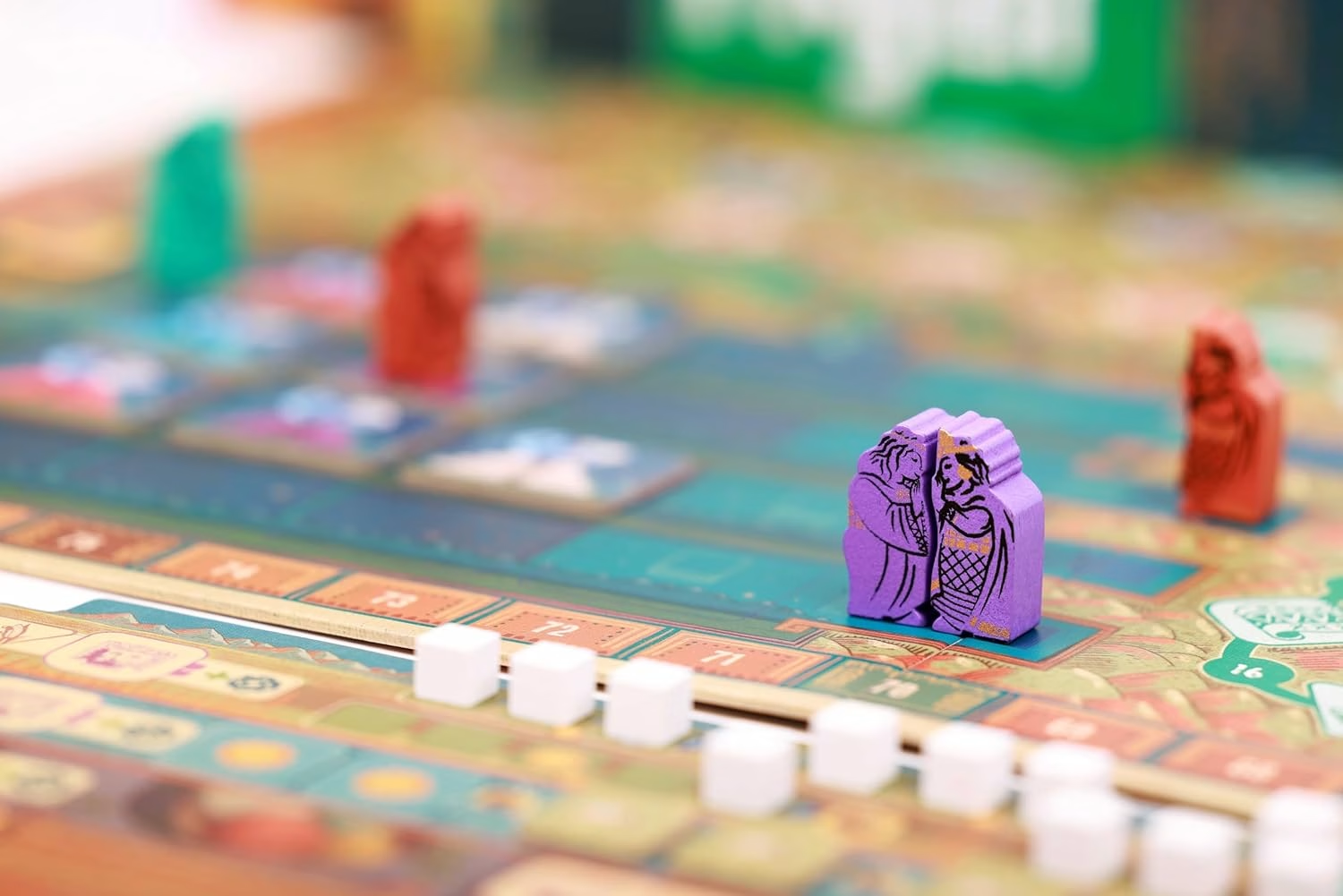
Ayar is about the founding of the Incan civilisation from the children of the gods of the Sun and Moon, as they make their trek from Titicaca and one pair at a time they dwindle until the last pair remain. There’s a hint of romance in terms of a story, and mechanically you wouldn’t be surprised that your choices decrease as you approach the end game. To me, it gives Ian O’Toole absolute carte blanche to go to town with their amazing illustration skills and the result is the subtly beautiful game world set before you in pleasing pastels.
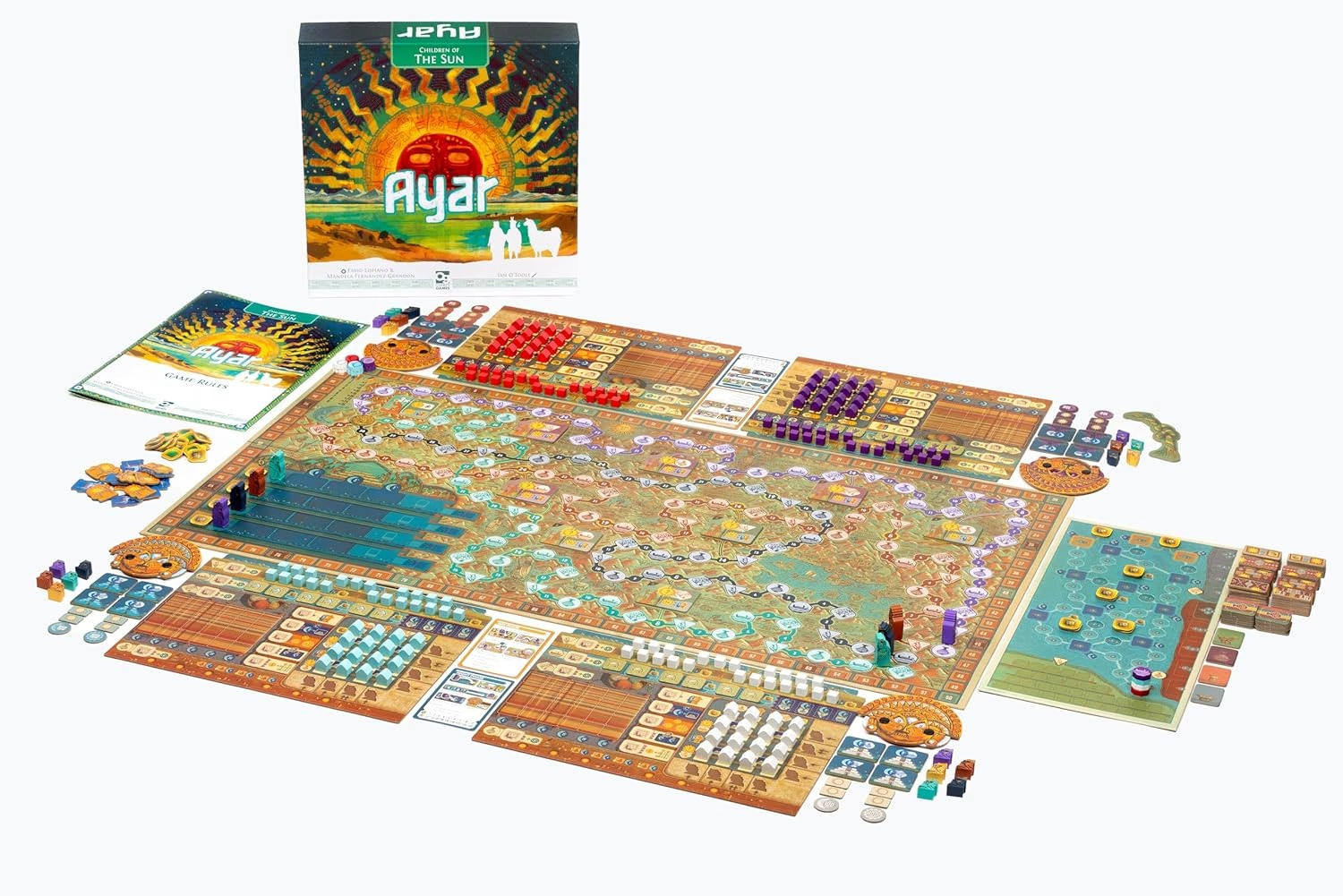 Compared to both Merv and Sankoré, to me Ayar offers a more straightforward and easier to grasp offering, and is probably the easiest of the current Fabio Lopiano games. That doesn’t mean it sits alongside other games as a pushover by any means. Like the previous entries in the series, opening the game box is a daunting prospect when you see the number of additional boards and raft of components that you’ll need to set up before you can get the game to the table. If anything, going through the set up process made me wonder if this was going to be even more obscure than Sankoré, which I liked, but was almost like lasagne. A bit of a task to put together and bake, even if the end result was decent, not something I’d want to be doing all the time.
Ayar is a selection of mini games based around the strength/ action mechanic, mostly recently seen by myself in the glorious Covenant. As you are playing Ayar you are removing small houses from your own player board, these ‘Tambo’ when placed on the larger map give you access to mini games that you then play in order to increase your end game score. As Tambo are removed the number of action points will increase for future column selections on your player board and increase the power of the action that you take. So in the first round, your initial choices and impacts are going to feel fairly small. By the time you get to the last of four rounds, then your choices for each of the mini games increases and allows you to set up the potential bigger scoring opportunities. Countering that though is the reduction of actions that you can take as the game progresses and Ayars are removed from the board as they pair up with their partners. By the time you reach the end of the game, those final couple of actions really have got to count and of course there’s a huge spoonful of analysis paralysis to help the medicine go down.
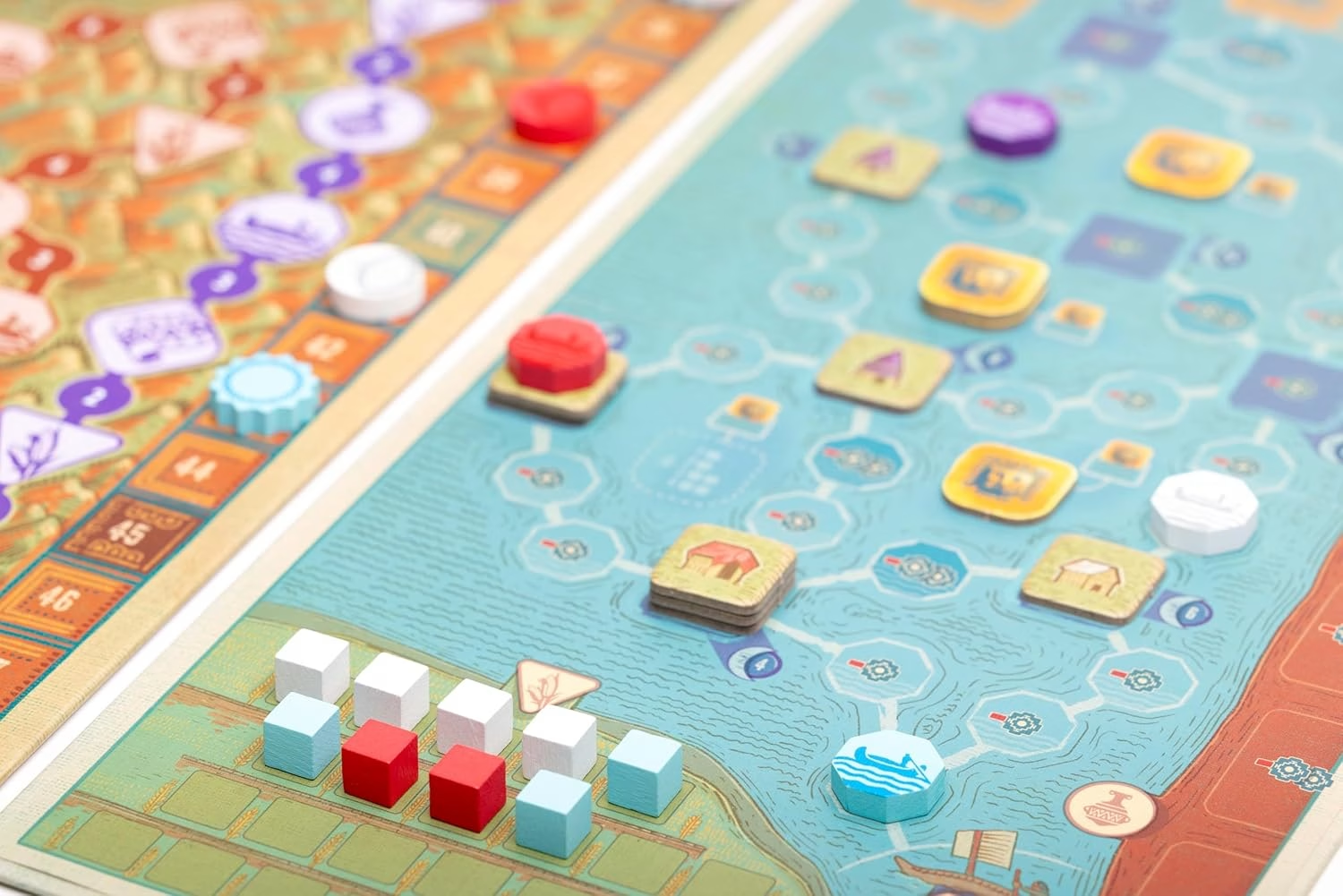 The mini games vary from an outright race across a group of islands, to pottery set collection, spatial rug puzzles and dominance, with all of the progress is based around how strong your action is based on the number of tambos that have been removed. It’s all about the scoring and its a strange affair to see that Ayar has decided to create two scoring tracks to tie closely with the theme, with both a moon and sun scoring track. Though both tracks aren’t scored at the same time with the moon track being the more consistent track that builds as you go, while the sun track is occasional and normally triggers for all the players as the Ayars move along the tracks. The kicker is that your track that has the least points between the two is your ultimate score. It leads to a dance of balance, and neglecting either is a route to potential failure. Moon points are award based on what you have achieved and how far you have come and are regular and there, while sun points are a decided affair and therefore a bit more sporadic. There’s decisions to be had as to when you trigger them, but it means that everyone potentially benefits.
 Ayar has time on its side. I’m becoming a big fan of Euro style games that decide they need to catch the last train of the evening and are determined not to hang on until past bedtime. Ayar is another one of these delights where it demands a strict number of turns and also asks that you hurry up while doing so, and I can’t see this hitting three hours unless you all decide to drink soft drinks all night and have only one toilet for bathroom breaks. Though you’ll spend a chunk of time on the set up as each player has a hefty bag of their own components to deal with, and then there can be the faff of setting up the game with the various tiles and chits. Ayar is the kind of game that you’ll make an effort to spend the time bagging up to make the set up as painless as possible, and beware if you’re player with the full four players as you might need the extendable table for the night. After playing Covenant a few times, I also wish that Ayar had also pushed for a double layer player board with some recesses, as it makes such a difference once you’ve got a selection of tiles and cubes on the playmat.
Honestly? I think if you’ve played Merv and Sankoré then Ayar is probably already sitting in your collection, or is on a wishlist somewhere waiting for you to add it to basket and buy it. It compliments the other two games quite nicely, makes itself more accessible than Sankoré. It is multiplayer euro gaming solitaire as expected, with the expected levels or interaction. You could argue that once you know how to play and solve the puzzle then it becomes a playing by numbers game. But let’s face it, you don’t really care what I have to say, because you’ve made your decision and this time, You’ve gone for the Sun, haven’t you. Haven’t you?
According to the Competition and Markets Authority. Receiving any kind of item in order to produce a critical piece constitutes as an Advert and must be labelled as such. Therefore please consider this piece as an Advert as defined by the CMA. This first impression piece is based on the retail version of the game provided to us by the designer and publisher. We were not paid monetary compensation for this review. We give a general overview of the gameplay and so not all of the mechanical aspects of the game may be mentioned. As with most first impressions, we try to capture how we felt after playing the game a couple of times. The majority of the games that we are play are going to take a reasonable number of sessions and playthroughs to fully understand every possibility that they offer. We hope this write up gives you an idea of whether or not this game is something that you will consider playing or even add to your collection. Even if we don't like something, hopefully it helps you to decide if it is something that you should find out more about. We always suggest you check out a gameplay video to give you a better understanding of the game as it is played. If you would like to support more content on the blog then please consider backing us on Patreon. https://www.patreon.com/werenotwizards


