Oh watch me in my playful might,
As I scale the heights of the very steps of Grace itself.
And stare into the Gorgon’s eyes without doubt,
And with all might and strain, defeat the saddening beast,
Collecting their betrayed head, and crest the hill.
Look down on the crashing, shouting wave,
And with covered ears, stare in greed,
At the false ports of Men that dare control Mother Sea
All those full fat pigs of golden boats over Yonder.
Watch them stare and turn to stone.
That is my judgement upon them.
(from Stuff I wrote for reviews.)
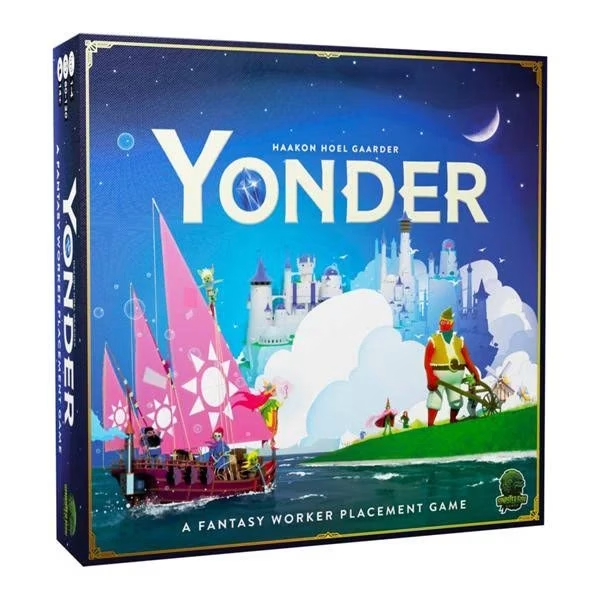
Oh I don’t know, do I. Sometimes I think I spend more time setting up a game, sitting with the pieces laid out on the table, start messing about with the rulebook, before muttering to myself f**k this, putting the whole lot away, ready to be attempted at another time. With Yonder however, I ended up collecting my starting boats, my starting pieces, and laying out the board, putting down the building cards, the envoys, and then the piles of various wooden tokens and characters, and learning the game. Only because it started to make sense to pretty quickly, and I also wanted to organise the game for when I was playing it with other people.
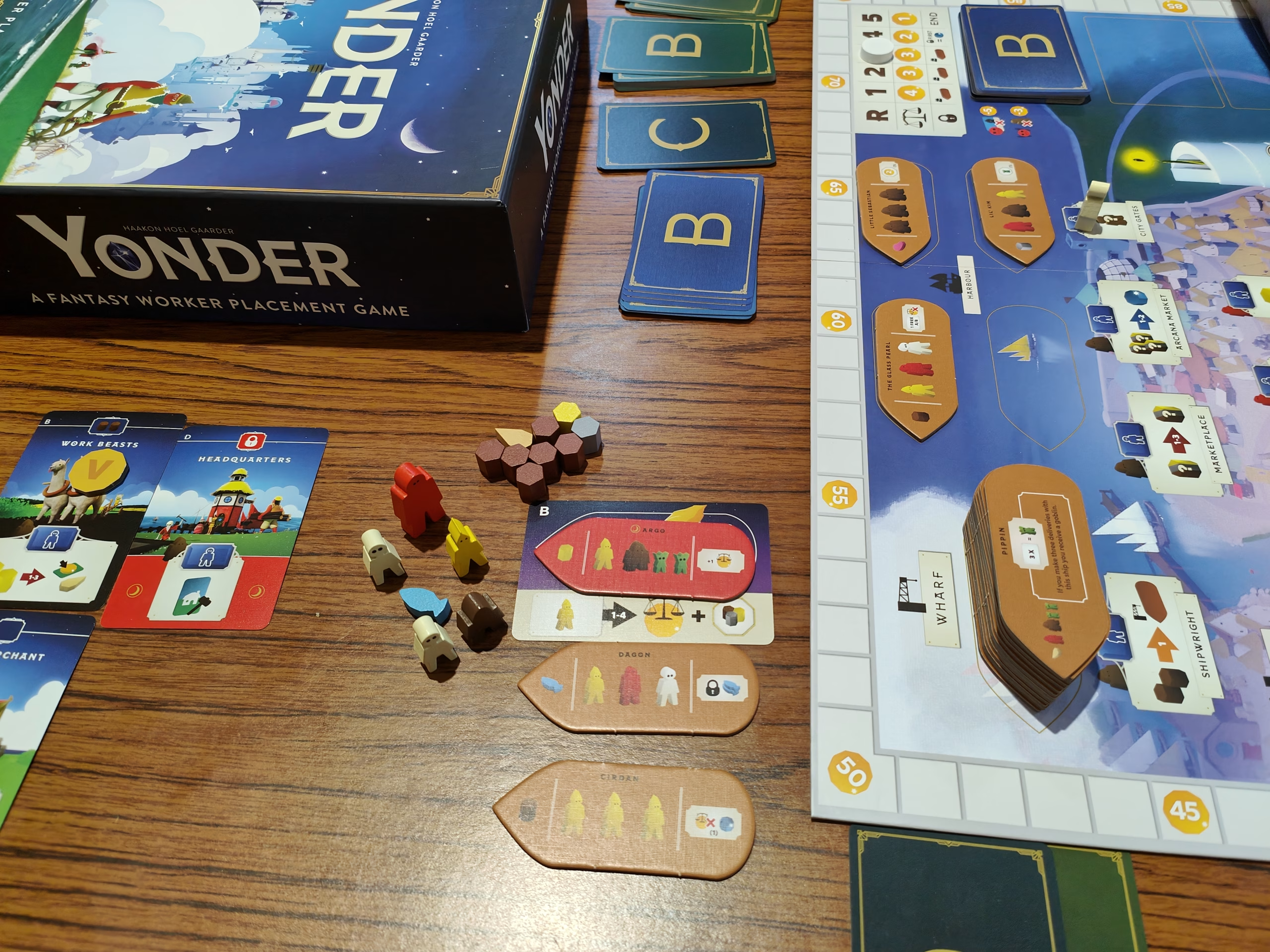
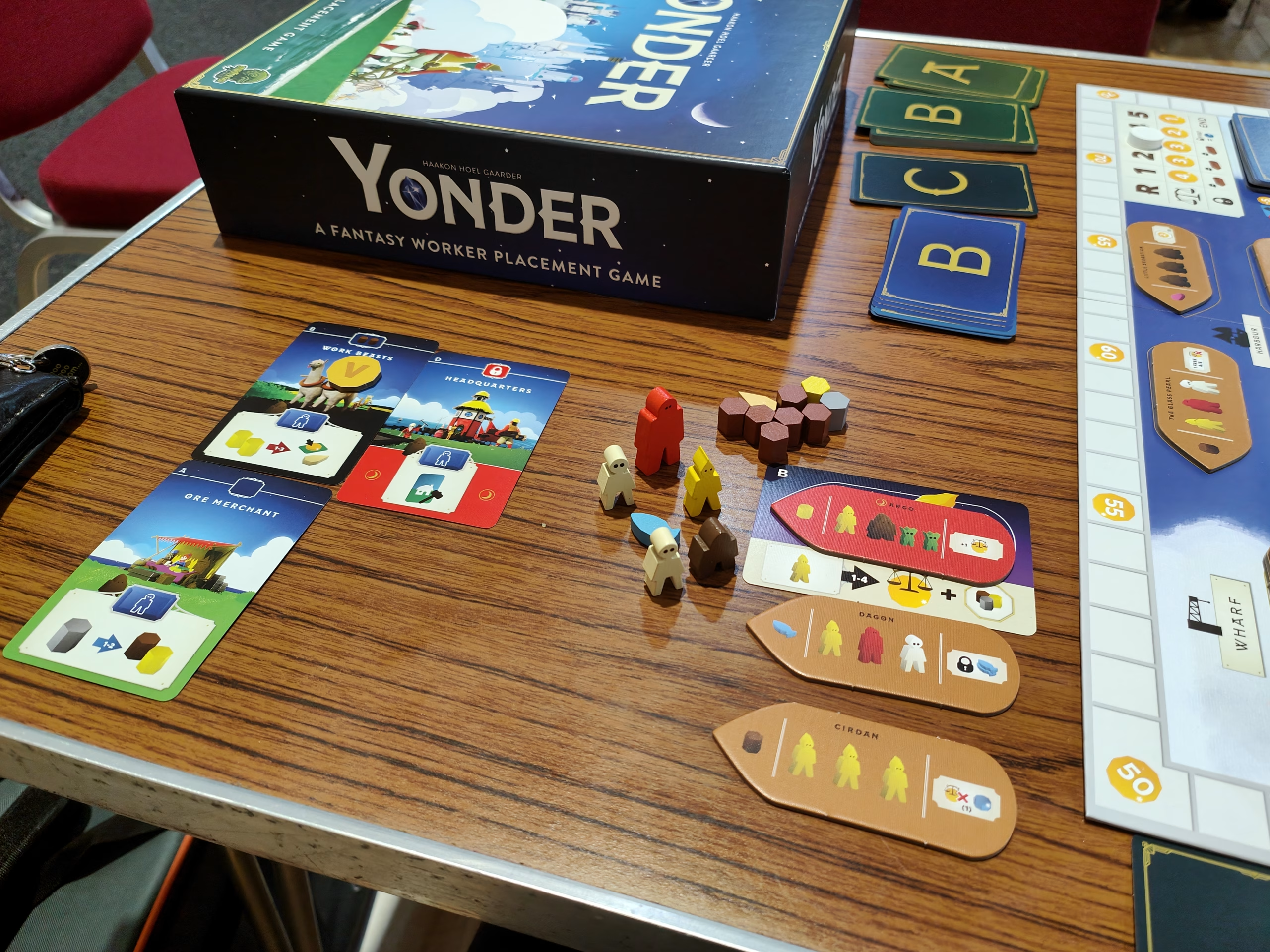
It is one of those games that you want to organise, as one of the things you notice is the sheer number of components in the box, there’s the expect resources in a game like this but we haven’t gone for the simplest of meeples because that would just be rude and so last season. There has to be loads of little things that need to be in lots of little bags and its fair to say that the Yonder box is crammed, and that is after you have punched out all of the tokens you need, including the coins but mostly boats. You’ll be punching out boats that you’ll be using in game and these things are thick and plentiful. Oh, the meeples, the goblins and elves and dwarves and the big Ogre lads and lastly the skeletons, who work hard but never need fed. Some of you are not going to like that. Feeding workers you exclaim, this is that farming game all over again, but bear with us, because it all makes sense in the end and is part of the mechanics but not necessarily the be all and end all, if you catch my drift.
Yonder is a build up worker placement game. Where you are trying to keep the envoys happy by fulfilling their requirements, build building to give yourself a little engine that could and make sure you are keeping enough workers to take you into the next round. One of those where the deck is seeded, so that as the rounds progress your choices become more costly, but the rewards that you can gain do so as well. The main board is busy, slightly intimidating, you’re staring at the board wondering why the spaces have got a little dwarf or ogre icon next them and then you are chuckling to yourself and applauding them for their cleverness as it makes things make sense. Now you see the icons everywhere and somehow you aren’t are lost as you though you were. Boats with their own little rewards. Envoys with their demands.All eventually just making sense.
Yonder has a tide like mechanic, where the game will flow between rounds of having workers and just getting by, or feeling like you are getting by. Rounds run as long as someone has workers to play, but unlike other worker placement games, those workers that you use on the main board are lost for future. Unless you are playing workers on the buildings you have built for yourself in you own miniature tableaux of mini engine building. Though in a twist, you can send your workers to other players boards to gain what they have built and this give them the choice to feed those workers and keep them for the next round, or starve them and send them on their way. Once you’ve played all you want to, you lock down your little hamlet for the rest of the round, effectively closing for business for the day, but taking on a boat that will give you workers and resources for the next round.
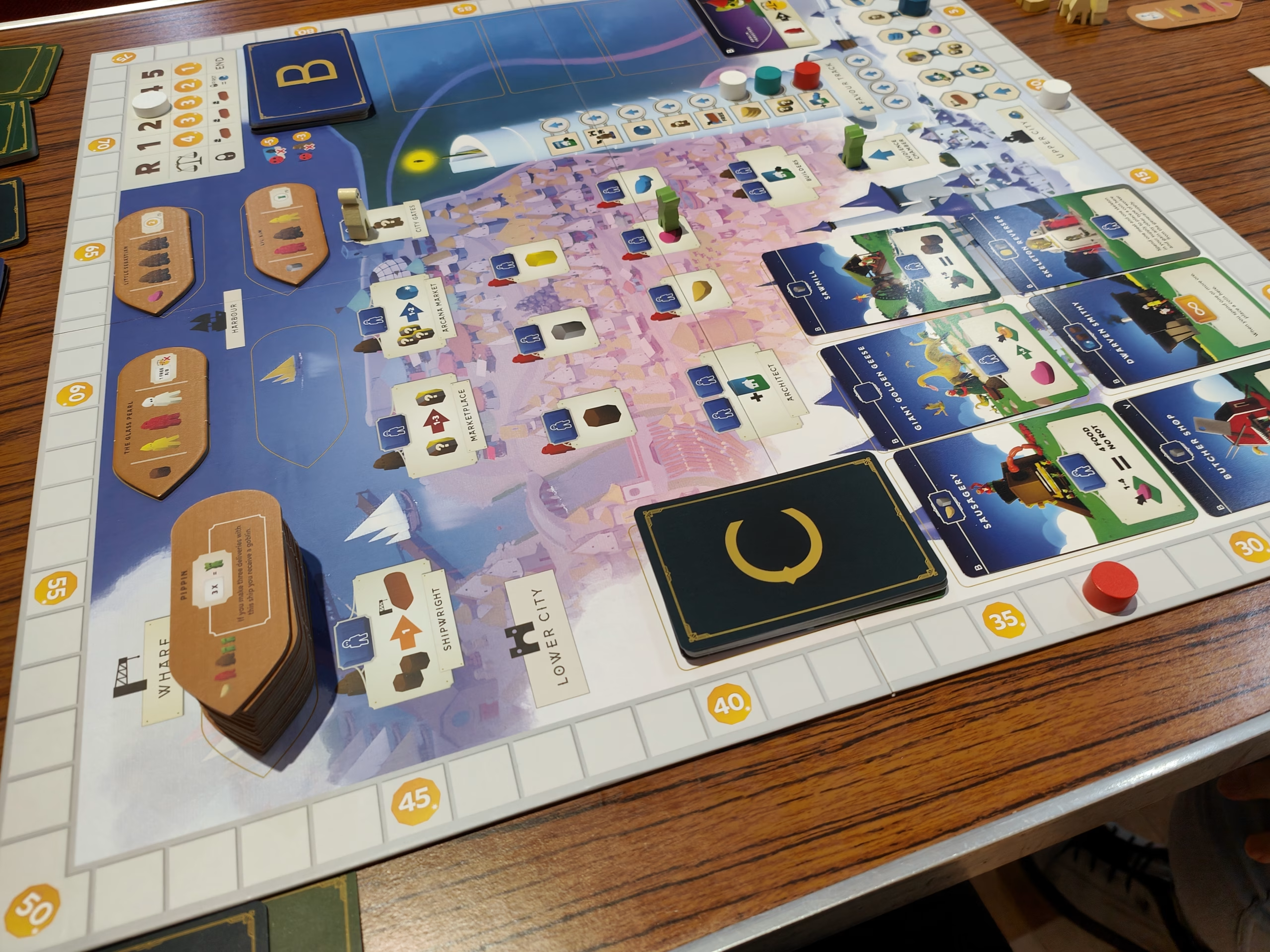 One of the main actions is to take an envoy, and then use a boat at your disposal to complete their requirements and gain the rewards they offer, failing to do so costs you in gold and therefore points and so committing to serving an envoy is serious business. So there is this balancing act of knowing you need to take an envoy on and making sure you can fulfil their needs for the future, all while trying to build up your own little hamlet and saving yourself enough workers for the future.
Five rounds doesn’t seem like a lot, and so Yonder is one of those games where the first impressions for me were positive, but I wished I had done some things slightly differently, like keep some workers back for the next rounds, regardless if it cost me food. Make sure that I was buying buildings to keep the village building, and looking for ways to make sure I could score any end game cards that I had active. The decks for each of the sections of the game is seeded so that the first rounds might only bring out cheaper and less useful cards but as the game quickly proceeds through the rounds, both the envoys and the buildings ramp up in terms of what they offer. There’s a distinct shift to envoys offering precious workers and buildings offering end scoring cards to boost those points towards the end.
To that end you could accuse Yonder of forcing the player down a specific direction in terms of how their strategies should play out. You need to be building in the first two or three rounds and building up resources and buildings, because later rounds remove the chance of gaining new workers entirely, but in my mind, its more about knowing the path and deciding how you are going to tread down it. The board seems busy at first but actually most of the spaces are for simple resource gathering and the only issue you might have with the iconography is for the various envoy cards, which are explained well in the rulebook.
Yonder fell into that very welcome territory of a box that seemed to have too many components, but actually didn’t, had a busy board, that wasn’t really, and had a gameplay flow that seemed complicated but actually wasn’t. We fairly quickly went from asking questions about what icons meant to verbalising our individual plans, and after that I remember everyone sitting around being fairly satisfied that time had been spent, and it had been spent well. We panicked on whether we were going to finish the last round, but by that time, we were already running on automatic. A solid solo mode when you don’t have friends available does wonders at sealing the deal. Pretty impressed with this one. Looking forward to seeing how it plays over time, and where it takes us. Over Yonder.
According to the Competition and Markets Authority. Receiving any kind of item in order to produce a critical piece constitutes as an Advert and must be labelled as such. Therefore please consider this piece as an Advert as defined by the CMA. This first impression piece is based on the retail version of the game provided to us by the designer and publisher. We were not paid monetary compensation for this review. We give a general overview of the gameplay and so not all of the mechanical aspects of the game may be mentioned. As with most first impressions, we try to capture how we felt after playing the game a couple of times. The majority of the games that we are play are going to take a reasonable number of sessions and playthroughs to fully understand every possibility that they offer. We hope this write up gives you an idea of whether or not this game is something that you will consider playing or even add to your collection. Even if we don't like something, hopefully it helps you to decide if it is something that you should find out more about. We always suggest you check out a gameplay video to give you a better understanding of the game as it is played. If you would like to support more content on the blog then please consider backing us on Patreon. https://www.patreon.com/werenotwizards